.png)
This was the advice from astronaut Mae Jemison that students were asked to respond to on this year’s Advanced Placement (AP) Language and Composition exam. As I began to draft this post, echoes of Jemison’s quote kept surfacing in my mind and across my keyboard. And the more I reflected on my own year of learning, the more I felt compelled to step yet again into some uncomfortable shoes.
That’s the origin story for the following post.

For my colleagues, I share with you my end-of-year reflection. And for my students, here is your teacher’s (very untimed) AP Language argument essay.
---------------
Jemison is right. Often the limitations of others’ experiences can curtail our own imagination. However, the wisdom we gather is quite dependent on the rooms in which we find ourselves. For the past year, I’ve had every opportunity to reevaluate the world of education for myself in rooms big and small, new and entrenched, struggling and thriving. And here’s what I’ve learned: When it comes to the possibilities envisioned by America’s educators, the limit simply does not exist.
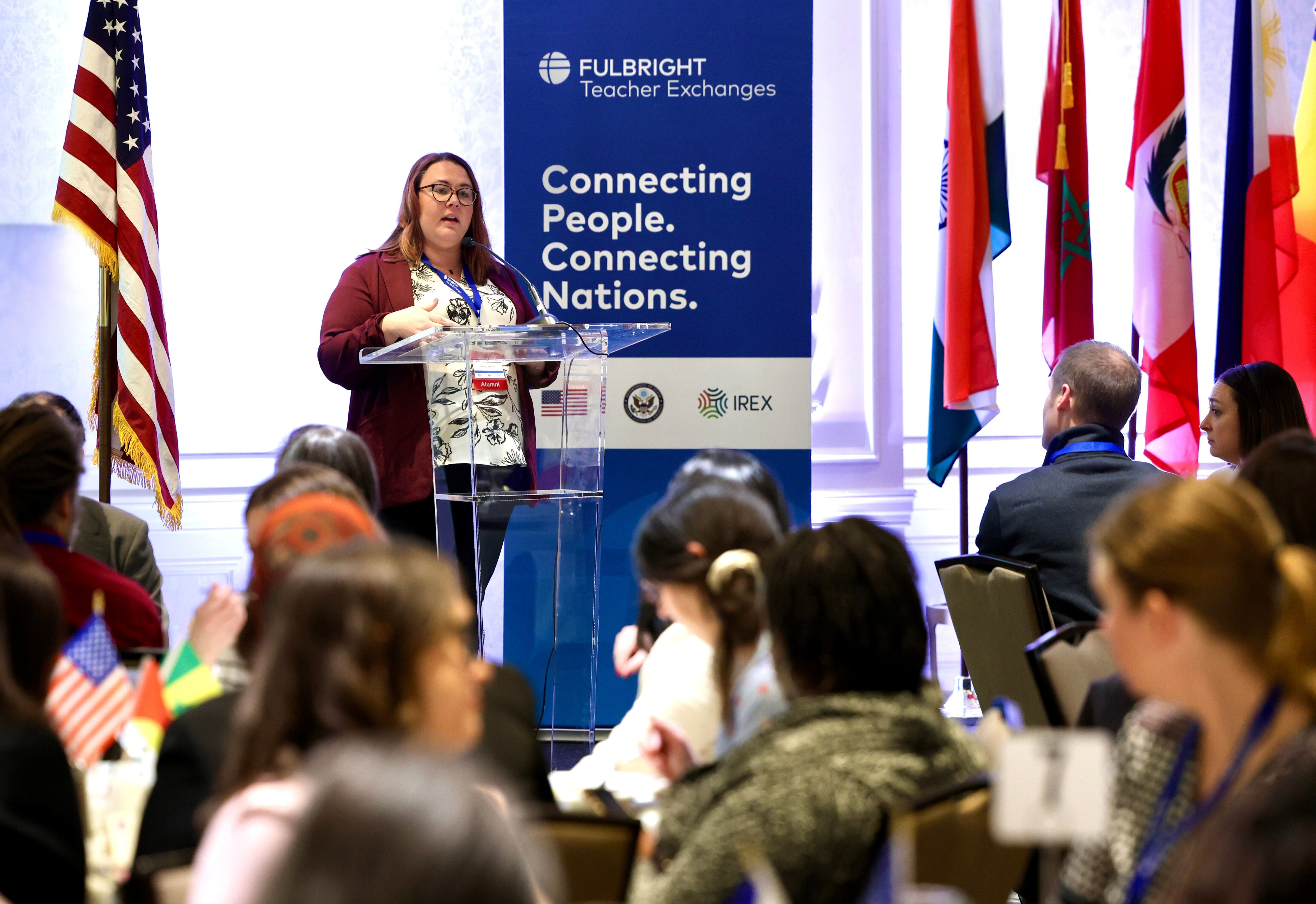
There’s no limit to ingenuity when we gather for good. In London, at Google’s AI for Learning Forum, I participated in collective brainstorming with advocates from all over the world. I saw first-hand the power of earnest dialogue and open-minded discourse.

There’s no limit to leadership when we empower our youth. In San Antonio, I visited the International School of the Americas. I stepped into classrooms where learners’ global citizenship goes hand-in-hand with their literacy skills and career readiness.
There’s no limit to our students’ potential when we cultivate opportunity. I witnessed this at Northern Arizona University and with Maryland’s Department of Education. Through both, scholarships and high school programming are making a college degree not just a dream but a viable pathway for the next generation.
Each of these examples underscores the universal theme of what I have realized this year: There’s no limit to the passion or persistence of our schools. Our classrooms are powered by relentless dedication, creativity, and urgency – all of it harnessed by our teachers, in service of our students.
But what do we do with this abundance of wisdom and this limitless desire to do better? How does it actually change anything? Jemison says we “can hear other people’s wisdom,” but we must “reevaluate the world for [ourselves].” Our schools know the second part of this advice is crucial, and that’s exactly what happens in our classrooms every day. Our 3.8 million teachers share their knowledge, their experience, their insight and their joy with 54 million students … and in doing so, they empower those same learners to see the world through their own eyes, to imagine its progress with their own minds, and to change it with their own hands.
I could give example after example of this transfer of agency. In Hawaii, with the help of their teacher Bryan Silver, high school students have created a mobile makerspace to bring project-based learning and STEM education to their entire school system. In Vermont, teens from Caitlin MacLeod-Bluver’s class testified in front of their state house of representatives for better mental health support for high schoolers. In Georgia, Holly Witcher’s young learners practice their fine motor skills and build local resource knowledge by learning how to cook what is regionally harvested. In Utah, Sayre Posey’s middle schoolers engage in critical research, using the lessons of the past to find their voices for the future.
At every age, in every classroom, all across America, our children are learning, our communities are growing, and our country is changing. Because our students are, indeed, reevaluating this world for themselves.
How lucky I have been to witness such beauty and strength, to have had the support necessary for that journey every step of the way. I extend my deepest gratitude to CCSSO, to my 2025 State Teacher of the Year compatriots, to my incredibly supportive network of family, friends and colleagues in Pennsylvania, and to my National Teacher of the Year predecessors. All of these people readily shared their invaluable wisdom … and continuously encouraged me to evaluate this world for myself, as well. My year of service has been a life-changing year of learning.

This summer we turn our attention to the celebration of 250 years of progress in America. Our schools have been there for every single era, and I can think of no one better to step into this role and into this moment than our 2026 National Teacher of the Year, Mr. Leon Smith. As a U.S. history educator from the Keystone State, he knows a thing or two about what it takes to inspire "We the People." I know his voice and guidance will encourage us to both revel and reflect upon all that we have endured and accomplished.

This jubilee will rightfully look different across our states and territories. But as we look ahead to tomorrow – and to the next 250 years – I know where we all can turn to for inspiration, for innovation and for a safe haven when we need it most. While each of us must choose for ourselves how we want to traverse from the past to the future, there is one place where wisdom will always welcome us, where we are all encouraged to “reevaluate the world,” where each of us may dare to grow through the unknown.
The path to America’s more perfect union travels directly through our nation’s classrooms.
—---------------
Crosson plans to return to Mifflin County High School for the 2026-2027 school year. She’ll be taking on new adventures teaching AP literature and American lit while growing her advocacy in global education and teacher development. You can follow along through her Medium blog or find her on Instagram and LinkedIn.

